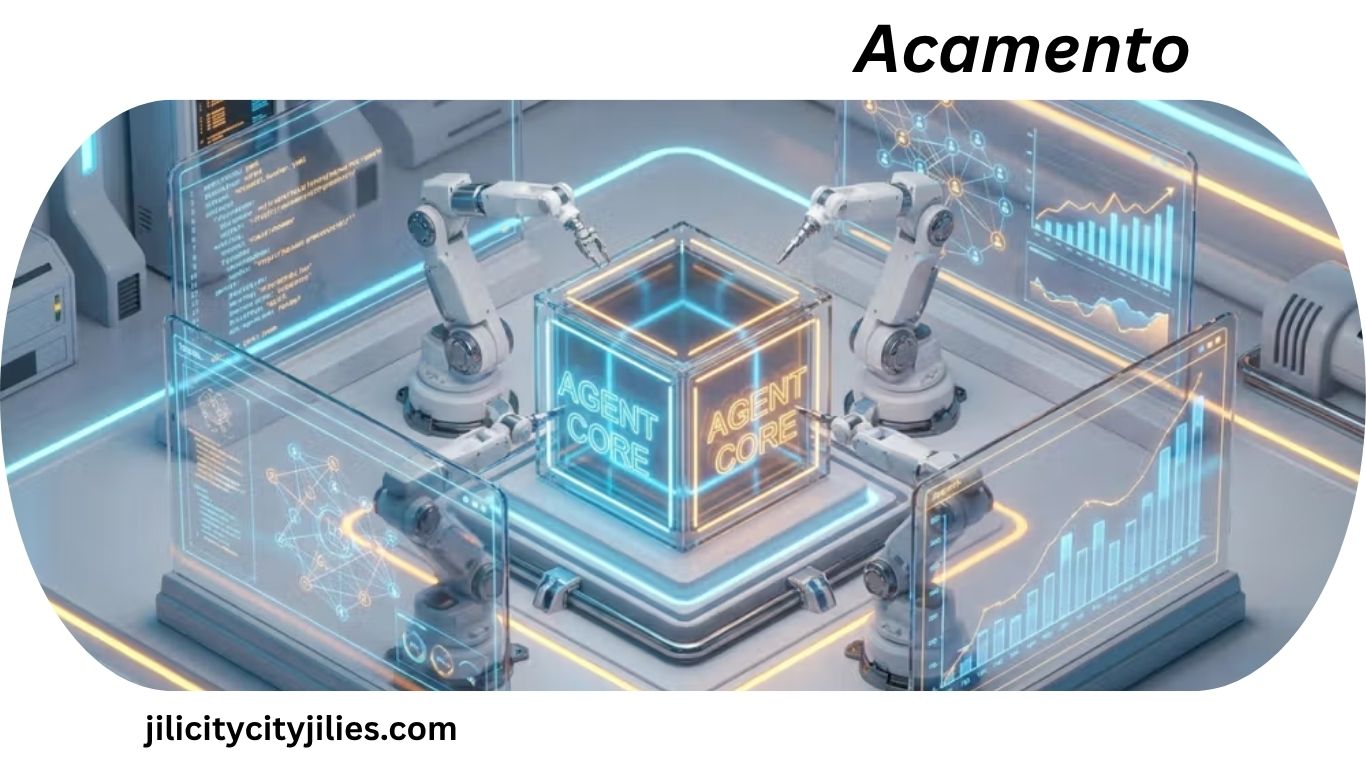
Acamento: The Complete AI Game Balancing Guide for Developers
Creating a great video game is about much more than attractive graphics or exciting gameplay. Every successful game depends on one important factor: balance. If one weapon is too powerful, players become frustrated. If another is too weak, it becomes useless. Finding the perfect balance has traditionally taken months of testing, countless updates, and large development teams.
This is where acamento is changing the future of game development.
Acamento is an advanced Artificial Intelligence-powered platform designed to help game developers create balanced gameplay, especially for artillery systems, weapons, projectiles, and combat mechanics. Instead of relying only on manual testing, developers can use AI to analyze thousands of gameplay scenarios in minutes.
As modern games become more complex, balancing every weapon, vehicle, character, and ability becomes increasingly difficult. Acamento simplifies this process by automatically testing countless variables and providing intelligent recommendations.
Whether you are an independent game developer, a AAA studio, or a university game design student, understanding acamento can help you build more enjoyable, competitive, and fair gaming experiences.
This comprehensive guide explores everything you need to know about acamento, including its features, benefits, AI technology, practical uses, and why it is becoming an important solution for modern game development.
What Is Acamento?
Acamento is an intelligent game development platform that uses Artificial Intelligence to improve game balance automatically. Rather than depending only on human testers, the platform simulates thousands or even millions of gameplay situations to identify balance issues before players experience them.
The system focuses heavily on artillery mechanics, projectile behavior, weapon damage, movement patterns, environmental effects, and combat fairness.
Instead of asking questions like:
“Does this weapon feel balanced?”
Acamento asks:
“What happens after 500,000 different combat situations?”
This difference is what makes AI-powered balancing much more effective than traditional testing.
By collecting gameplay data and applying machine learning algorithms, acamento helps developers create games that feel competitive, realistic, and enjoyable from the very first release.

Why Game Balancing Is So Important
Many games fail not because they lack creativity but because they are poorly balanced.
Players quickly notice when:
- One weapon dominates every battle
- Certain characters are impossible to defeat
- Vehicles outperform every other option
- Maps favor one team
- Damage systems feel unfair
Poor balancing causes:
- Negative reviews
- Lower player retention
- Frustrated communities
- Frequent emergency updates
- Competitive imbalance
Also Read:GD7 Playz.Blogspot/2025/03/RBS.html: Complete Guide for 2026
Acamento reduces these risks by helping developers identify problems much earlier during development.
How Acamento Uses Artificial Intelligence
Artificial Intelligence allows acamento to perform tasks that would normally require thousands of hours of manual testing.
Instead of testing one scenario at a time, AI continuously evaluates different gameplay combinations.
For example, the system may analyze:
- Weapon damage
- Reload speed
- Projectile velocity
- Blast radius
- Player movement
- Environmental obstacles
- Defensive equipment
- Character health
- Accuracy rates
- Win percentages
AI compares all of these variables together instead of examining them individually.
This creates a much deeper understanding of overall gameplay balance.
The Core Technology Behind Acamento
Several AI technologies work together inside the platform.
Machine Learning
Machine learning helps the software recognize gameplay patterns over time.
As more simulations are completed, the AI becomes smarter at predicting balance problems.
Behavior Simulation
Instead of using fixed rules, AI simulates realistic player behavior.
It considers:
- Aggressive players
- Defensive players
- Strategic players
- Beginners
- Professional players
This creates more accurate balancing recommendations.
Predictive Analytics
Predictive analytics estimates how future updates may affect gameplay before developers publish them.
For example:
Increasing weapon damage by 8% might increase its win rate by 21%.
Instead of discovering this after release, developers know beforehand.
Automated Scenario Testing
Traditional testing may examine hundreds of situations.
Acamento can evaluate hundreds of thousands within a short period.
This dramatically improves testing efficiency.
How Acamento Balances Artillery Systems
Artillery mechanics are among the most difficult systems to balance.
Many variables influence each projectile.
These include:
- Gravity
- Explosion radius
- Projectile speed
- Reload time
- Maximum range
- Environmental damage
- Splash damage
- Ammunition limits
- Terrain interaction
- Weather conditions
Changing just one value often affects every other gameplay system.
Acamento analyzes these relationships simultaneously.
Instead of guessing the best values, developers receive data-supported recommendations.
Features That Make Acamento Unique
Acamento offers several advanced capabilities that separate it from traditional balancing methods.
Intelligent Weapon Analysis
The platform evaluates every weapon individually.
It identifies:
- Overpowered weapons
- Underpowered weapons
- Balanced weapons
- Inconsistent weapons
Developers receive detailed reports instead of relying on player complaints.
Massive Simulation Engine
One of the platform’s greatest strengths is its ability to perform an enormous number of gameplay simulations.
Rather than testing only several matches, AI may simulate thousands of complete battles.
This produces much more reliable balance data.
Automatic Recommendations
Instead of only identifying problems, acamento recommends practical solutions.
Examples include:
- Reduce explosion damage by 6%
- Increase reload time by 0.8 seconds
- Improve projectile accuracy
- Adjust recoil patterns
These recommendations save developers significant time.
Performance Monitoring
The system continuously monitors gameplay metrics.
It tracks:
- Accuracy
- Kill rates
- Death rates
- Damage output
- Match duration
- Weapon selection
- Player success rates
This creates a complete picture of game health.
Major Benefits of Using Acamento
The popularity of AI-powered development tools continues growing because they provide measurable improvements.
Some of the biggest advantages include:
Faster Development
Balancing that once required months can often be completed much faster.
Developers spend less time guessing and more time improving gameplay.
Lower Development Costs
Testing is expensive.
Large QA teams require significant budgets.
AI reduces repetitive testing workloads, allowing human testers to focus on creative and complex gameplay experiences.
Higher Player Satisfaction
Balanced games create better experiences.
Players are more likely to continue playing when matches feel fair.
Long-term engagement often increases as gameplay remains competitive.
Better Competitive Integrity
For esports and ranked multiplayer games, fairness is critical.
Acamento helps developers ensure that success depends on player skill rather than overpowered mechanics.
Continuous Improvement
Balancing is not a one-time process.
Games evolve through updates, expansions, and downloadable content.
Acamento supports ongoing optimization by analyzing new data after every change, helping developers maintain a balanced experience over time.
Who Can Benefit from Acamento?
Although acamento is designed primarily for professional game developers, its capabilities make it useful for a wide range of users across the gaming industry.
Independent Game Developers
Small studios often have limited budgets and fewer testers. Acamento gives indie developers access to AI-powered balancing that would otherwise require a much larger team.
AAA Game Studios
Large companies develop complex games with hundreds of weapons, maps, characters, and abilities. AI helps manage this complexity by analyzing interactions at a scale that manual testing cannot match.
Game Designers
Designers can use the platform to validate gameplay ideas before full implementation, reducing the risk of costly redesigns later in development.
Quality Assurance Teams
QA professionals can focus on identifying unique gameplay issues while Acamento handles repetitive balance testing through automated simulations.
Educational Institutions
Universities and game development programs can use AI balancing tools to teach students modern development practices and data-driven design.
Esports Developers
Competitive games require exceptional balance. Acamento helps ensure that no single strategy, weapon, or character dominates the competitive scene.
Real-World Applications of Acamento
The flexibility of acamento allows it to support many different types of games beyond traditional artillery-focused titles.
Some practical applications include:
- First-person shooters with multiple weapon classes
- Real-time strategy games involving artillery and siege units
- Multiplayer online battle arena (MOBA) games with character abilities
- Tank combat simulators
- Military simulation games
- Battle royale games
- Tower defense games
- Action role-playing games with ranged combat
- Sci-fi games featuring futuristic weapons
- Fantasy games with magical projectile systems
Because the platform focuses on gameplay balance rather than a single genre, it can adapt to many different design styles.
Why Acamento Stands Out from Traditional Balancing
Traditional balancing often depends on intuition, limited playtesting, and player feedback after release. While these methods remain valuable, they can overlook subtle issues that only emerge after thousands of matches.
Acamento introduces a more proactive approach. By using AI to simulate extensive gameplay scenarios, it identifies hidden balance problems before players encounter them. This allows developers to make informed adjustments based on data rather than assumptions.
Some key differences include:
- Faster identification of balance issues
- Data-driven recommendations instead of guesswork
- Scalable testing across countless gameplay combinations
- Continuous optimization as games evolve
- Reduced reliance on post-launch patches
These advantages make acamento a powerful addition to the modern game development workflow.
Step-by-Step Guide to Using Acamento
Every game development project is different, but most teams can follow a similar workflow when using acamento. The platform is designed to fit naturally into the game development process, from early prototypes to post-launch updates.
Step 1: Define Your Gameplay Goals
Before running AI simulations, developers should establish clear design objectives.
Examples include:
- Creating realistic artillery mechanics
- Ensuring every weapon has a useful role
- Preventing overpowered equipment
- Improving competitive fairness
- Reducing player frustration
- Supporting different play styles
Clear goals allow acamento to evaluate whether the game is meeting the desired experience.
Step 2: Import Game Data
The next step is providing the AI with gameplay information.
This may include:
- Weapon statistics
- Character attributes
- Vehicle performance
- Projectile behavior
- Damage values
- Health systems
- Movement speed
- Environmental settings
- Ability cooldowns
The more accurate the data, the more valuable the AI analysis becomes.
Step 3: Configure Simulation Settings
Developers choose how the AI should test the game.
Typical simulation options include:
- Number of simulated matches
- Player skill levels
- AI behavior types
- Weather conditions
- Terrain variations
- Team sizes
- Match duration
- Difficulty settings
Testing many different scenarios helps reveal hidden balancing issues.
Step 4: Run AI Simulations
Once configured, acamento begins testing.
Instead of playing only a few matches, the platform can simulate thousands or even millions of encounters.
These simulations evaluate:
- Win rates
- Damage output
- Accuracy
- Survival time
- Weapon effectiveness
- Team balance
- Strategy diversity
The AI performs this analysis much faster than manual testing alone.
Step 5: Review AI Reports
After simulations are complete, developers receive detailed reports.
These reports often include:
- Performance summaries
- Balance scores
- Weapon rankings
- Heat maps
- Trend analysis
- Gameplay statistics
- Suggested improvements
The reports help teams understand not only what needs adjustment but also why.
Step 6: Apply Recommended Changes
Rather than making random adjustments, developers can use the AI’s recommendations to improve balance.
Examples include:
- Lowering excessive damage
- Increasing reload time
- Reducing splash radius
- Improving weaker weapons
- Adjusting movement speed
- Fine-tuning recoil
Because recommendations are based on simulation data, they are generally more reliable than guesswork.
Step 7: Repeat the Process
Balancing is never finished.
Every update introduces new variables.
Acamento supports continuous improvement by allowing developers to rerun simulations after every gameplay change.
This creates a cycle of testing, learning, improving, and validating.
Understanding AI Artillery Balancing
Artillery systems are among the most complex gameplay mechanics because many factors interact at the same time.
Changing a single value may influence several other systems.
For example:
Increasing projectile speed may:
- Improve accuracy
- Reduce reaction time
- Increase hit rate
- Make defensive strategies less effective
Similarly, increasing explosion radius may:
- Increase average damage
- Reduce the need for aiming skill
- Change map balance
- Affect team strategies
Acamento evaluates these relationships together instead of treating each setting independently.
This holistic analysis helps developers create artillery systems that feel both powerful and fair.
Balancing More Than Just Weapons
Although artillery optimization is a major strength, acamento is capable of balancing many other gameplay elements.
Also Read:MMSBRE: Complete Guide to the Multi-Media Streaming and Broadcast Relay Environment
Characters
The AI evaluates:
- Health
- Speed
- Armor
- Abilities
- Skill cooldowns
- Resource management
This prevents one character from becoming significantly stronger than the rest.
Vehicles
Vehicle balancing considers:
- Top speed
- Turning ability
- Durability
- Firepower
- Fuel usage
- Defensive capabilities
This ensures every vehicle serves a meaningful purpose.
Maps
Even maps influence game balance.
Acamento can identify:
- Areas with excessive advantages
- Uneven resource placement
- Defensive bottlenecks
- Spawn point fairness
- Travel distance differences
Balanced maps contribute to a more enjoyable player experience.
How Acamento Improves Multiplayer Games
Multiplayer games are especially challenging because human players constantly discover new strategies.
Acamento helps developers stay ahead by identifying potential balance issues before they become widespread.
Benefits for multiplayer games include:
- Fair matchmaking experiences
- Better weapon diversity
- Reduced exploit opportunities
- Improved competitive integrity
- Balanced team compositions
- Healthier online communities
When players feel that victories are earned through skill rather than unfair mechanics, they are more likely to remain engaged.
Supporting Single-Player Experiences
Balance is equally important in single-player games.
Poor balance can make a game either too easy or unnecessarily frustrating.
Acamento helps fine-tune:
- Enemy difficulty
- Boss encounters
- Resource availability
- Mission progression
- Weapon upgrades
- Difficulty levels
This creates a smoother learning curve for players of different skill levels.
Integration with Popular Game Development Workflows
Modern game development relies on a combination of engines, design tools, analytics platforms, and testing frameworks.
Acamento is designed to complement these workflows rather than replace them.
Developers can use AI insights during:
- Early game design
- Prototype testing
- Alpha development
- Beta testing
- Pre-launch optimization
- Live service updates
- Seasonal content releases
- Expansion development
By fitting into multiple stages of production, the platform supports long-term game quality.
Data-Driven Decision Making
One of acamento’s biggest advantages is replacing assumptions with measurable evidence.
Instead of debating whether a weapon feels too strong, developers can review:
- Win percentages
- Damage averages
- Pick rates
- Kill-to-death ratios
- Survival statistics
- Match completion times
These metrics provide objective evidence that supports smarter design decisions.
Reducing Human Bias
Manual balancing often reflects the preferences of the testing team.
Experienced players may favor advanced mechanics, while new players may struggle with them.
Acamento evaluates gameplay from multiple simulated perspectives, including beginner, intermediate, and advanced skill levels.
This helps create a more inclusive experience for the entire player community.
Saving Development Time
Game balancing can consume a significant portion of a project’s schedule.
Without automation, developers may spend weeks repeatedly adjusting values and organizing test sessions.
Acamento accelerates this process by:
- Running continuous simulations
- Automating repetitive tests
- Generating reports instantly
- Highlighting the highest-priority issues
- Suggesting practical improvements
The result is faster development without sacrificing quality.
Challenges When Using AI for Game Balancing
Although AI offers many advantages, it should not replace human creativity.
Developers should be aware of several limitations.
Gameplay Feel
AI measures numbers effectively, but player enjoyment also depends on emotions, excitement, and memorable moments.
Human designers remain essential for evaluating the overall experience.
Creative Design Choices
Some games intentionally include unusual mechanics for storytelling or unique gameplay.
AI recommendations should support these goals rather than override them.
Quality of Input Data
AI can only analyze the information it receives.
Incomplete or inaccurate data may produce misleading recommendations.
Maintaining clean, well-organized game data is essential for achieving reliable results.
Best Practices for Using Acamento
To get the most value from the platform, development teams should follow a few practical guidelines.
- Define clear gameplay goals before testing.
- Update simulations whenever major changes are introduced.
- Combine AI analysis with real player feedback.
- Monitor long-term gameplay trends after release.
- Review recommendations instead of applying every suggestion automatically.
- Test different player skill levels.
- Balance for both fun and fairness.
- Keep historical records of gameplay adjustments to track progress over time.
These practices help teams use acamento as a strategic decision-making tool rather than a simple automation platform.
The Future of AI-Powered Game Balancing
Artificial Intelligence is expected to play an increasingly important role in game development over the coming years.
Future versions of platforms like acamento may include:
- Real-time balance adjustments during live events
- Personalized gameplay recommendations based on player skill
- AI-assisted level design
- Dynamic enemy behavior optimization
- Automated content testing before updates are released
- Predictive analysis of player retention and engagement
As AI technology continues to evolve, developers will gain access to even more powerful tools for creating enjoyable and balanced gaming experiences.
In the future, AI may become a standard part of every professional game development pipeline, helping studios deliver higher-quality games while reducing production time and costs.
Expert Insights: Why Acamento Represents the Future of AI in Game Development
Artificial Intelligence is transforming nearly every industry, and game development is no exception. Over the last decade, AI has evolved from powering non-player characters (NPCs) to becoming a valuable assistant for designers, artists, programmers, and quality assurance teams.
Acamento represents this next generation of AI-powered development tools. Rather than replacing human creativity, it strengthens it by handling repetitive analysis and identifying patterns that humans may overlook.
Professional developers understand that creating a balanced game is an ongoing process rather than a one-time task. Every update, new weapon, character, or game mode can affect the overall player experience. Acamento supports continuous improvement by providing reliable data throughout a game’s lifecycle.
One of the platform’s biggest strengths is its ability to combine automation with intelligent recommendations. Instead of simply reporting statistics, it explains why certain mechanics may be causing imbalance and suggests practical solutions.
This approach helps development teams make better decisions while allowing designers to focus on creativity, storytelling, and innovation.
Industry Trends Driving the Growth of Acamento
Several major trends explain why AI-powered balancing platforms are becoming increasingly valuable.
Growing Game Complexity
Modern games contain thousands of interconnected systems.
Developers must balance:
- Weapons
- Characters
- Vehicles
- Maps
- Abilities
- Equipment
- Progression systems
- Crafting mechanics
- Economy systems
- Multiplayer matchmaking
Managing these systems manually becomes increasingly difficult as games grow in size.
Acamento helps organize and analyze this complexity using AI.
Rise of Live Service Games
Many modern games receive updates every few weeks.
New content often includes:
- Characters
- Maps
- Weapons
- Missions
- Events
- Cosmetic items
- Balance patches
Each update has the potential to introduce unexpected gameplay issues.
Acamento allows developers to evaluate updates before release, reducing the likelihood of major balance problems.
Increasing Player Expectations
Today’s players expect games to feel polished from day one.
Online communities quickly identify overpowered mechanics and share them through videos, livestreams, and social media.
Using AI-powered testing helps developers address many of these issues before players discover them.
Growth of Competitive Gaming
Esports continues to expand worldwide.
Competitive games require exceptional fairness because even small imbalances can influence tournament results.
Acamento supports competitive integrity by providing objective balance analysis backed by large-scale simulations.
Acamento Compared with Traditional Game Testing
Traditional testing remains an essential part of game development, but it has limitations.
Human testers can only play a limited number of matches within a given timeframe.
AI, on the other hand, can simulate thousands of gameplay sessions in a fraction of the time.
The comparison below highlights the difference.
| Feature | Traditional Testing | Acamento |
| Testing Speed | Moderate | Extremely Fast |
| Simulation Scale | Hundreds of matches | Thousands to millions |
| Data Analysis | Manual | AI-powered |
| Recommendations | Human judgment | Data-driven insights |
| Continuous Learning | Limited | Machine learning improves over time |
| Automation | Low | High |
| Hidden Pattern Detection | Difficult | Advanced |
| Scalability | Limited by team size | Easily scalable |
Rather than replacing manual testing, acamento complements it by providing a deeper layer of analysis.
Common Misconceptions About Acamento
As AI tools become more common, several misconceptions have emerged.
Myth 1: AI Replaces Game Designers
Reality:
Acamento supports designers by providing useful data, but creative decisions remain in human hands.
Myth 2: AI Automatically Creates Perfect Balance
Reality:
Perfect balance is subjective.
Different games intentionally prioritize realism, accessibility, or competitive gameplay.
Developers still make the final decisions.
Myth 3: AI Only Benefits Large Studios
Reality:
Independent developers often benefit even more because automation helps compensate for smaller testing teams and limited budgets.
Myth 4: AI Makes Games Less Creative
Reality:
Automating repetitive testing gives designers more time to experiment with innovative ideas instead of repeatedly adjusting numerical values.
Tips for Getting the Best Results from Acamento
Teams that achieve the greatest success with acamento typically follow several best practices.
Start using the platform early in development rather than waiting until the final testing phase.
Collect accurate gameplay data throughout development.
Run simulations after every significant gameplay update.
Compare AI recommendations with feedback from real players.
Maintain detailed records of balancing changes to understand long-term trends.
Avoid making multiple major adjustments at once, as gradual improvements are easier to evaluate.
Continue monitoring gameplay after launch because player behavior often changes over time.
The Long-Term Value of Acamento
The value of AI-powered balancing extends far beyond a game’s initial release.
Long-term benefits include:
- Reduced maintenance costs
- Faster content updates
- Better player retention
- Improved review scores
- Healthier competitive communities
- More efficient development workflows
- Stronger confidence in design decisions
As games become larger and more sophisticated, tools like acamento will likely become an essential part of professional development.
Also Read:Pravi Celer: Complete Guide to the Traditional Whole Celery Plant, Benefits, Uses & Nutrition
Frequently Asked Questions About Acamento
What is acamento used for?
Acamento is an AI-powered platform that helps game developers balance gameplay, optimize artillery systems, analyze combat mechanics, and improve overall game fairness through intelligent simulations.
Is acamento only for artillery-based games?
No. Although it is particularly effective for artillery balancing, acamento can also optimize characters, vehicles, maps, abilities, and many other gameplay systems across different genres.
Can indie developers benefit from acamento?
Yes. Independent developers often have limited testing resources, making AI-powered analysis especially valuable for improving game quality efficiently.
Does acamento replace human game testers?
No. It complements human testing by automating repetitive simulations and providing data-driven insights while human testers continue evaluating creativity, usability, and player enjoyment.
Can acamento improve multiplayer balance?
Yes. The platform analyzes weapon usage, player performance, team composition, and match outcomes to help create fairer multiplayer experiences.
How does AI improve game balancing?
AI processes large amounts of gameplay data, identifies hidden patterns, predicts the impact of gameplay changes, and recommends adjustments based on objective analysis.
Is acamento suitable for educational purposes?
Yes. Universities and game development programs can use the platform to teach students modern balancing techniques and AI-assisted design workflows.
Can acamento reduce development costs?
In many cases, yes. By automating repetitive testing tasks and accelerating balance analysis, the platform helps teams use their resources more efficiently.
Does acamento support live-service games?
Yes. It is well suited for games that receive regular updates because developers can continuously test new content before it reaches players.
What makes acamento different from traditional balancing tools?
Unlike traditional methods that rely heavily on manual playtesting, acamento combines AI simulations, machine learning, predictive analytics, and automated recommendations to deliver faster and more comprehensive balance analysis.
Final Thoughts
Acamento represents an exciting step forward in AI-assisted game development. As games become more complex and player expectations continue to rise, developers need smarter tools to maintain quality, fairness, and long-term engagement.
By combining artificial intelligence, machine learning, predictive analytics, and automated gameplay simulations, acamento helps development teams identify balance issues earlier, make data-driven decisions, and reduce the time spent on repetitive testing.
Its applications extend beyond artillery balancing to include characters, vehicles, maps, abilities, and complete gameplay systems. Whether used by an independent developer building a first game or a large studio managing a global multiplayer title, the platform provides meaningful insights that support better design choices.
The future of game development will likely involve closer collaboration between human creativity and intelligent automation. Rather than replacing developers, platforms like acamento empower them to create richer, fairer, and more enjoyable gaming experiences.
As AI technology continues to evolve, acamento is well positioned to become an essential part of modern game development, helping studios deliver higher-quality games faster while meeting the expectations of today’s competitive gaming community.