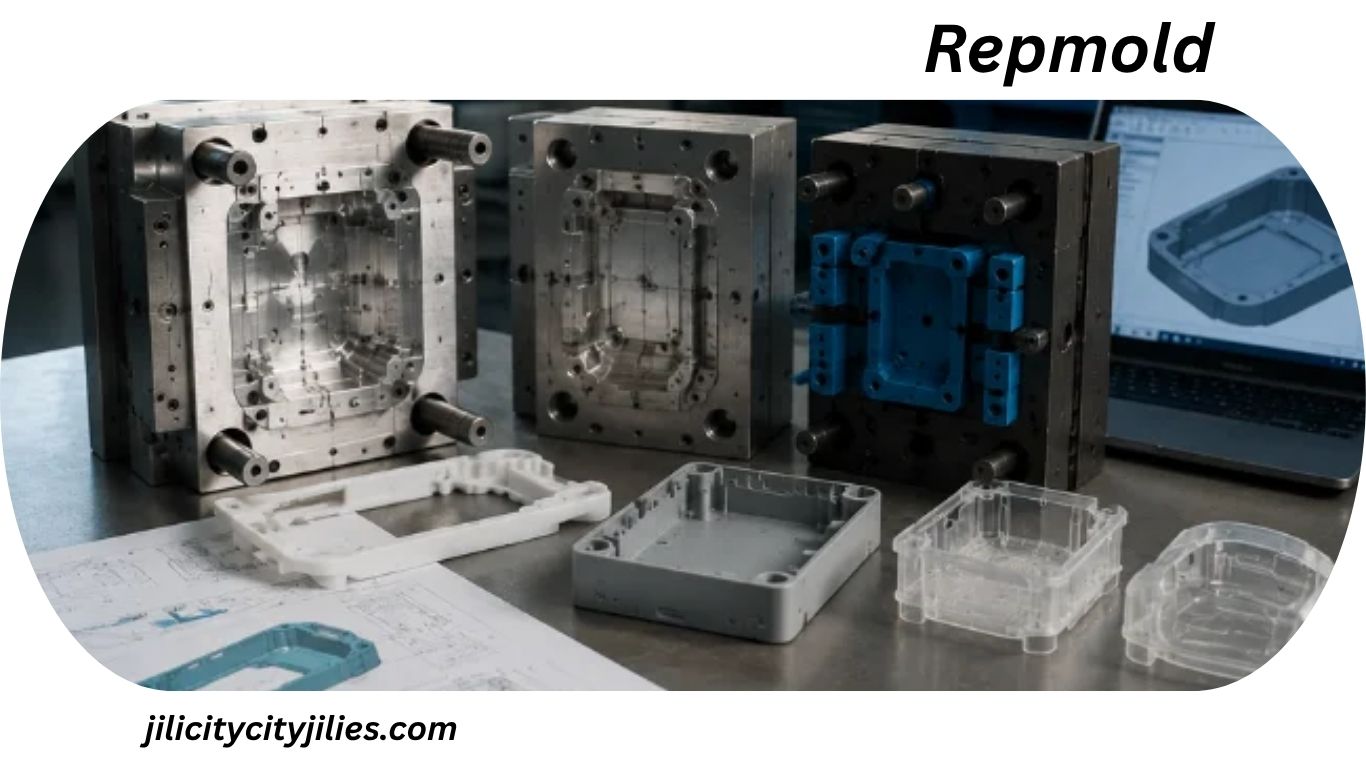
Repmold: The Complete Guide to Digital-Driven Molding and Modern Manufacturing
Modern manufacturing is changing faster than ever before. Companies no longer have months to develop a product before bringing it to market. Customers expect innovation, faster delivery, better quality, and lower costs. To meet these demands, manufacturers are adopting smarter production methods that combine digital technology with advanced manufacturing processes.
One emerging concept gaining attention is Repmold.
At its core, repmold refers to a digital-driven molding and replication process that helps manufacturers quickly design, test, improve, and produce components with greater speed and precision. Instead of relying only on traditional mold development methods, repmold integrates digital engineering, computer modeling, rapid prototyping, and intelligent manufacturing systems into one streamlined workflow.
Although the term is still developing within modern manufacturing discussions, the ideas behind repmold reflect many of today’s biggest industry trends, including digital transformation, smart factories, automation, simulation, additive manufacturing, and rapid production.
This guide explains everything you need to know about repmold, including how it works, why manufacturers use it, its advantages, challenges, industrial applications, future developments, and best practices. Whether you are a manufacturing professional, engineering student, business owner, or simply interested in advanced production technologies, this article provides a complete understanding of repmold in easy-to-read language.
What Is Repmold?
Repmold is a digital-first manufacturing approach that combines molding technologies with digital design, rapid replication, virtual testing, and production optimization.
Rather than creating physical molds through lengthy trial-and-error processes, engineers first develop highly accurate digital models. These models can be tested, improved, and validated before actual production begins.
The main goal of repmold is to reduce development time while improving quality, consistency, and manufacturing efficiency.
Instead of repeatedly modifying expensive physical molds, manufacturers use digital tools to identify problems early, reducing waste and production delays.
In simple terms, repmold allows manufacturers to:
- Design products digitally
- Simulate manufacturing conditions
- Build prototypes quickly
- Improve designs before production
- Produce consistent components
- Reduce manufacturing costs
- Speed up product launches
Understanding the Meaning Behind Repmold
The name “repmold” can be understood as combining two important manufacturing concepts.
“Rep” represents replication, repeatability, rapid production, and reproducibility.
“Mold” refers to molding processes used to manufacture parts through shaped tooling.
Together, repmold represents an intelligent manufacturing process where digital technology improves the creation, replication, and optimization of molded products.
Instead of viewing molding as only a physical process, repmold treats manufacturing as an integrated digital ecosystem.
Why Repmold Is Becoming Important
Manufacturing competition has become global.
Also Read:SosoActive Co: Complete Guide to SEO News, Google Updates & Digital Marketing
Companies must introduce products faster while maintaining high quality and controlling production costs.
Traditional manufacturing methods often involve:
- Long design cycles
- Multiple prototype revisions
- Expensive tooling modifications
- Material waste
- Production delays
Repmold addresses many of these problems by bringing digital intelligence into every stage of production.
Manufacturers can identify design issues before cutting metal, reducing expensive mistakes later.
The Core Principles of Repmold
Several principles define the repmold methodology.
Digital-First Design
Everything begins with accurate digital product modeling.
Engineers create three-dimensional models that include dimensions, tolerances, material specifications, and manufacturing requirements.
Rapid Replication
Once a design is approved, digital files can be reproduced quickly across different production systems.
This improves consistency between manufacturing locations.
Virtual Testing
Before manufacturing starts, simulations evaluate:
- Structural strength
- Material flow
- Heat distribution
- Mold filling
- Cooling performance
- Product durability
Continuous Improvement
Repmold encourages ongoing optimization rather than treating manufacturing as a fixed process.
Production data helps engineers improve future designs.
Data-Driven Manufacturing
Manufacturing decisions rely on measurable production data instead of assumptions.
This improves efficiency throughout the production lifecycle.
How Repmold Works
A typical repmold workflow follows several connected stages.
Product Planning
Engineers identify customer requirements, product goals, dimensions, materials, and production targets.
Digital Design
Using CAD software, engineers create accurate three-dimensional product models.
Every measurement is carefully verified.
Digital Simulation
Computer simulations test how the product behaves during manufacturing.
Potential issues are discovered before production.
Prototype Development
Rapid prototyping technologies create sample components for inspection.
Physical testing confirms digital results.
Mold Optimization
Engineers refine mold geometry to improve production speed and quality.
Pilot Manufacturing
A limited production run verifies real-world performance.
Quality inspections ensure consistency.
Full Production
Once validation is complete, large-scale manufacturing begins.
Digital monitoring continues throughout production.
Key Technologies Used in Repmold
Several advanced technologies support modern repmold systems.
Computer-Aided Design (CAD)
CAD software allows engineers to create accurate digital product models.
Computer-Aided Engineering (CAE)
CAE software performs structural analysis and manufacturing simulations.
Digital Twins
Digital twins create virtual copies of physical manufacturing systems.
Engineers monitor performance without interrupting production.
Artificial Intelligence
AI analyzes manufacturing data to identify improvements, predict maintenance needs, and optimize production schedules.
Machine Learning
Machine learning algorithms improve manufacturing accuracy as more production data becomes available.
Industrial Internet of Things
Connected sensors collect real-time manufacturing information.
This data supports predictive maintenance and quality monitoring.
Cloud Computing
Cloud platforms enable collaboration between design teams, production facilities, suppliers, and customers.
Automation
Automated manufacturing systems improve consistency while reducing human error.
Materials Commonly Used in Repmold
The repmold approach supports many different manufacturing materials.
These include:
- Engineering plastics
- Thermoplastics
- Thermosetting polymers
- Aluminum alloys
- Steel
- Titanium
- Composite materials
- Carbon fiber
- Rubber
- Silicone
- Biodegradable plastics
- High-performance polymers
Material selection depends on product requirements, durability, cost, and environmental conditions.
Industries Using Repmold
Many industries benefit from digital-driven molding and replication.
Automotive Manufacturing
Automakers use repmold for:
- Interior panels
- Engine components
- Lighting systems
- Plastic housings
- Dashboard assemblies
- Trim parts
Faster tooling development helps shorten vehicle development cycles.
Aerospace
Aircraft manufacturers require extremely precise components.
Repmold improves quality while reducing production errors.
Medical Devices
Medical products require strict dimensional accuracy.
Repmold supports manufacturing of:
- Surgical instruments
- Diagnostic equipment
- Medical housings
- Laboratory devices
Consumer Electronics
Electronic manufacturers produce millions of identical parts.
Digital replication ensures consistent quality.
Industrial Equipment
Factories use repmold for machinery parts requiring durability and precision.
Consumer Products
Many everyday products benefit from digital molding.
Examples include:
- Kitchen tools
- Household products
- Storage containers
- Sports equipment
- Toys
Major Benefits of Repmold
Manufacturers adopt repmold because it delivers measurable advantages.
Faster Product Development
Digital simulations reduce the number of physical prototypes required.
Products reach the market sooner.
Improved Product Quality
Virtual testing identifies design flaws before manufacturing begins.
Lower Production Costs
Fewer mistakes reduce tooling expenses and material waste.
Better Consistency
Digital manufacturing improves repeatability across production facilities.
Also Read:Gamerxo Dot Com: Complete Guide to Its Current Status, Features & Future
Greater Flexibility
Design changes can be implemented quickly without restarting the entire manufacturing process.
Reduced Material Waste
Accurate simulations minimize unnecessary production.
Enhanced Collaboration
Digital files can be shared instantly between teams worldwide.
Better Customer Satisfaction
Higher quality products lead to fewer defects and stronger customer confidence.
Repmold vs Traditional Manufacturing
Design Process
Traditional manufacturing often relies on repeated physical modifications.
Repmold emphasizes digital design validation before production.
Development Speed
Traditional methods typically require longer product development.
Repmold significantly reduces development time.
Cost Efficiency
Digital optimization lowers production costs over time.
Product Accuracy
Digital simulations improve dimensional accuracy.
Scalability
Repmold makes it easier to expand production without sacrificing quality.
Common Challenges of Repmold
Despite its advantages, repmold also presents challenges.
High Initial Investment
Advanced software, automation equipment, and digital infrastructure require significant investment.
Employee Training
Workers must learn new digital tools and manufacturing technologies.
Data Management
Large amounts of production data require secure storage and analysis.
System Integration
Older manufacturing systems may not integrate easily with modern digital platforms.
Cybersecurity
Connected manufacturing environments require strong security practices.
Best Practices for Successful Repmold Implementation
Organizations can improve success by following several best practices.
Invest in Digital Skills
Training employees improves adoption and productivity.
Standardize Design Procedures
Consistent design standards reduce production errors.
Use Simulation Early
Testing products before manufacturing saves time and money.
Monitor Production Data
Continuous monitoring identifies opportunities for improvement.
Maintain Quality Standards
Quality inspections remain essential even in highly automated environments.
Encourage Cross-Department Collaboration
Engineering, production, quality assurance, and management should work together throughout development.
How Artificial Intelligence Improves Repmold
Artificial intelligence plays an increasingly important role.
AI helps manufacturers:
- Predict equipment failures
- Improve production scheduling
- Optimize material usage
- Detect quality issues
- Reduce downtime
- Improve manufacturing efficiency
- Support automated inspections
As AI continues improving, repmold systems will become even smarter.
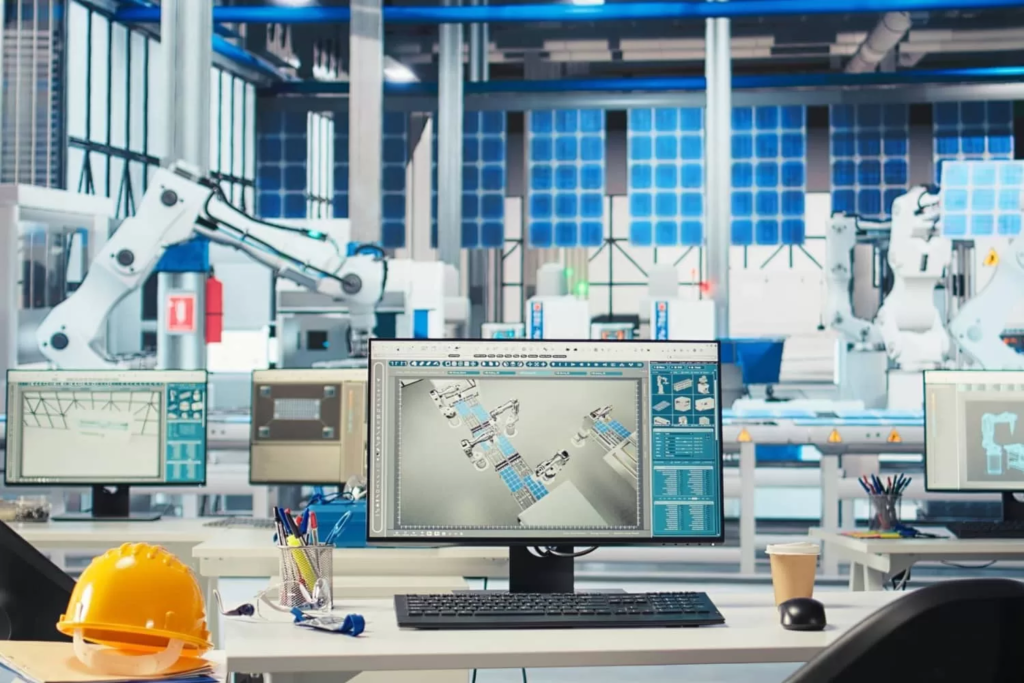
The Role of Automation in Repmold
Automation reduces manual work while increasing production consistency.
Robotic systems can perform repetitive tasks with extremely high precision.
Examples include:
- Material handling
- Mold loading
- Quality inspection
- Assembly
- Packaging
Automation also improves workplace safety by reducing exposure to hazardous environments.
Sustainability and Environmental Benefits
Modern manufacturers increasingly focus on environmental responsibility.
Repmold supports sustainability through:
- Reduced waste
- Better material efficiency
- Lower energy consumption
- Fewer defective products
- Longer mold life
- Improved recycling opportunities
Digital optimization allows manufacturers to produce more while using fewer resources.
Repmold and Smart Factories
Smart factories combine digital systems, automation, sensors, artificial intelligence, and connected equipment.
Repmold fits naturally into this environment because every stage of production generates valuable data.
Manufacturers can monitor production in real time and quickly respond to changing conditions.
How Small Businesses Can Benefit from Repmold
Repmold is not limited to large corporations.
Small manufacturers can also benefit by:
- Reducing prototype costs
- Improving product quality
- Launching products faster
- Increasing production efficiency
- Competing with larger companies
- Making better business decisions using production data
Cloud-based engineering software has made advanced manufacturing tools more accessible than ever.
Future Trends of Repmold
The future of repmold is closely connected to Industry 4.0 and digital manufacturing.
Several developments are expected to shape its future.
AI-Driven Manufacturing
Artificial intelligence will automatically optimize production settings.
Digital Twins
Virtual manufacturing systems will become increasingly realistic.
Predictive Manufacturing
Machines will identify problems before failures occur.
More Sustainable Materials
Eco-friendly materials will become more common.
Faster Prototyping
Advanced additive manufacturing technologies will further reduce development time.
Greater Automation
Robotics will handle more manufacturing tasks with minimal human intervention.
Real-Time Quality Control
Sensors and AI will continuously inspect products during production.
Cloud Manufacturing
Global collaboration will become even easier through cloud-connected production systems.
Common Misconceptions About Repmold
Many people misunderstand what repmold actually means.
One misconception is that it simply refers to mold replication. In reality, repmold includes the entire digital workflow from design through production optimization.
Another misconception is that only large manufacturers can use repmold. Today, affordable software and cloud technologies allow businesses of many sizes to adopt digital manufacturing practices.
Some also believe that automation replaces human workers completely. In practice, skilled engineers, designers, technicians, and quality professionals remain essential. Repmold changes how people work rather than eliminating the need for expertise.
Is Repmold the Future of Manufacturing?
Many experts believe manufacturing will continue moving toward digital-first production systems.
Also Read:Intelligent Frame Creation: Everything You Need to Know About Motion Interpolation
The principles behind repmold align with several long-term industry trends:
- Digital engineering
- Intelligent automation
- Artificial intelligence
- Smart factories
- Sustainable manufacturing
- Data-driven decision-making
- Rapid innovation
As customer expectations continue growing, manufacturers that embrace these technologies will likely become more competitive.
Rather than replacing traditional manufacturing knowledge, repmold enhances it through better planning, smarter analysis, and more efficient production.
Conclusion
Repmold represents a modern approach to manufacturing that combines digital engineering, rapid replication, intelligent design, and advanced production technologies into a single efficient workflow. By integrating CAD, simulation, automation, artificial intelligence, digital twins, and real-time data analysis, manufacturers can develop products faster, reduce costs, improve quality, and respond more quickly to changing market demands.
Although implementing repmold requires investment in technology, employee training, and digital infrastructure, the long-term advantages often outweigh these initial challenges. Companies that successfully adopt this approach can improve productivity, reduce waste, enhance collaboration, and build more resilient manufacturing operations.
As Industry 4.0 continues to evolve, the concepts behind repmold are expected to play an increasingly important role in shaping the future of global manufacturing. Businesses that embrace digital-driven molding and replication today will be better prepared for tomorrow’s competitive manufacturing landscape.
Frequently Asked Questions (FAQs)
What does repmold mean?
Repmold refers to a digital-driven molding and replication process that combines digital design, simulation, rapid prototyping, and manufacturing optimization to produce high-quality components more efficiently.
Is repmold a manufacturing technology or a workflow?
It is best understood as a manufacturing workflow that integrates multiple digital technologies into the molding and replication process.
Can repmold reduce product development time?
Yes. By using digital simulations and rapid prototyping, repmold helps manufacturers identify problems early and reduce the time needed to move from concept to production.
Which industries gain the most value from repmold?
Automotive, aerospace, medical device, electronics, industrial equipment, packaging, and consumer goods manufacturers can all benefit from repmold.
Does repmold replace traditional molding?
No. Repmold enhances traditional molding by adding digital design, simulation, automation, and data analysis to improve efficiency and quality.
Is repmold suitable for custom manufacturing?
Yes. Repmold supports both mass production and customized manufacturing because digital designs can be updated quickly without extensive physical modifications.
How does repmold improve quality control?
It combines virtual testing, real-time production monitoring, sensor data, and automated inspections to detect and correct issues before they affect large production runs.